Virtual Exchanges
International virtual exchange programme
“Twinning at a distance to build peace together”
International virtual exchange activities
“Since wars begin in the minds of men, it is in the minds of men that the defences of Peace must be constructed” (UNESCO Constitution).
This quotation alone makes clear the vital importance that education for peace should have in the education of every person on earth.
The Declaration on the Right to Peace, adopted by the United Nations General Assembly in December 2016, is therefore highly relevant and important. For the first time, it establishes that all human beings have the right to enjoy peace. It also recognises that peace is more than the absence of war: it is a fundamental human right requiring “a positive, dynamic participatory process where dialogue is encouraged and conflicts are solved in a spirit of mutual understanding and cooperation” (A/C.3/71/L.29, Preamble). Of its five articles, the fourth is dedicated to education for peace, to “strengthen among all human beings the spirit of tolerance, dialogue, cooperation and solidarity”.
But what does peace education, or education for peace, mean?
It means making every educational setting a tool for peace rather than adding another subject: a journey that develops children’s and young people’s creativity and autonomy in addressing problems, learning to dialogue and experiment, and recognising their own resources and, as Don Milani said, everyone’s responsibility for everything.
Because a Culture of Peace cannot be imposed: it is learned, passed on, shared and, above all… lived.
Objectives
- Teach peace as a daily way of life through practical actions and shared reflection.
- Develop global and intercultural citizenship skills.
- Promote empathy, active listening and respect for differences.
- Encourage nonviolent conflict resolution and cooperation among peers.
- Encourage critical reflection on global issues: peace, human rights, the environment and social justice.
- Promote international cooperation between schools and youth groups.
General content
- Peace education and pedagogy
- Positive relationships and peaceful conflict resolution
- Conscious and responsible lifestyles
- Intercultural understanding and dialogue
- A disarmed economy
Planned activities
The programme includes:
- four 60-minute meetings, each preceded by classroom preparation of materials and activities to share;
- ongoing exchanges of letters, messages, drawings and more between young people throughout the year.
Discover also:
 Building bridges of fraternityPromote peaceful and inclusive societies for sustainable development.
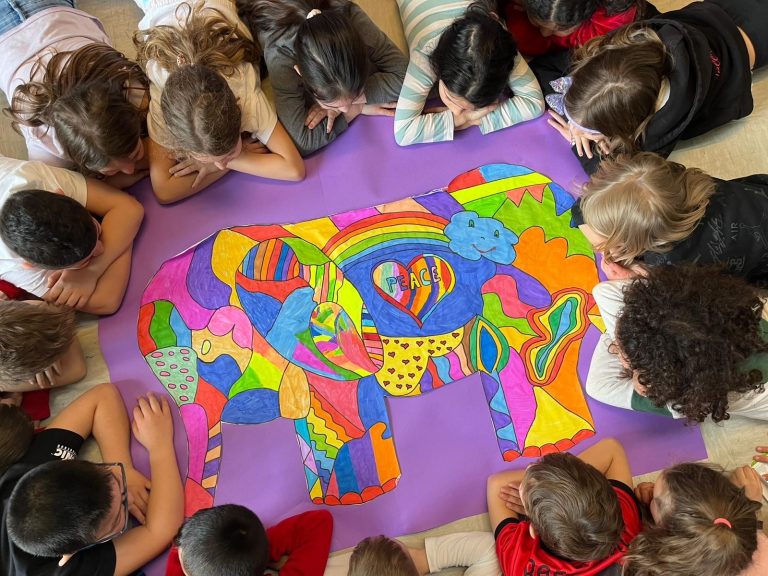 Elephants for PeaceA journey of creativity and serenity through art!
 Giant mandala for peaceA collective activity combining art, community participation and environmental awareness.
 International Essay ContestWords that build the future.